
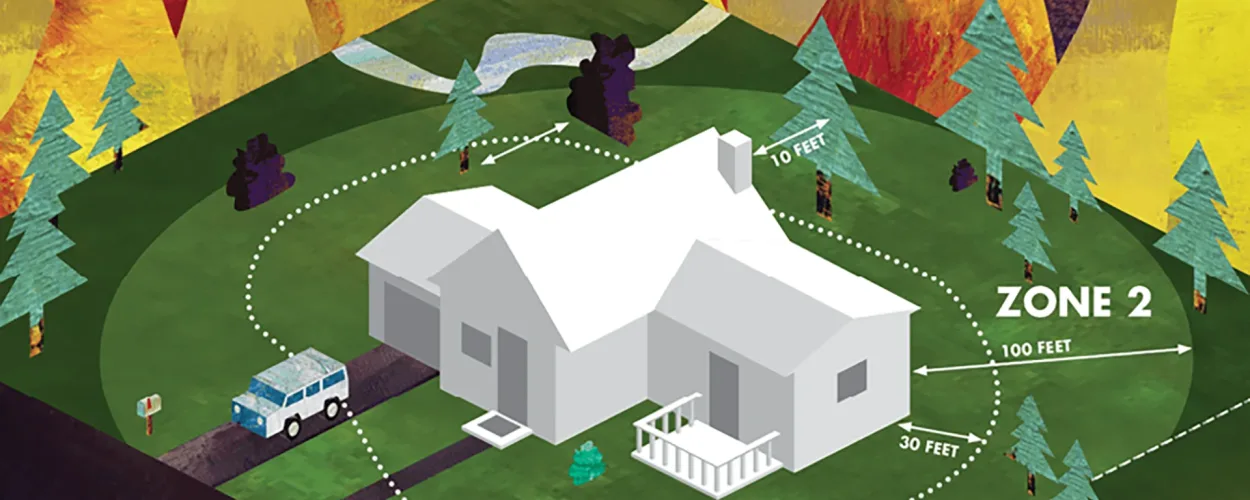
What should you do to prevent wildfires from spreading through your community? What can you do to protect yourself and your home? Start with the house, working outward to create a ‘defensible space’ between the structure and landscaping and always follow evacuation orders. Creating vegetation-free space around your home can be an opportunity to remove flammable, non-native shrubs and trees. Native, fire-resistant plants will create a safer environment. Spaced no closer than four or five feet apart, low-growing shrubs such as prickly pear and California sagebrush help reduce the risk of fire spreading to any structures. Planting native species not only reduces the fire risk to your home, but creates habitat for local insects, birds and other wildlife in your yard. Plants like rattlepod and buckwheat are less flammable and attract local pollinators like the Palos Verdes blue and gray hairstreak butterflies. The Palos Verdes Peninsula Land Conservancy sells native plants grown in its nursery, and sales support the organization’s work. Many of these plants grow well in southwestern Los Angeles County. For more information, please visit: Native Plant Sales
Frequently Asked Questions (FAQ)
- Q: How does using native plants help protect my home from wildfires?
A: Native plants are often more fire-resistant than many non-native species. They have adapted to the local climate and soil conditions, and many, like lemonade berry and coastal sage scrub, possess characteristics that make them less likely to ignite or spread flames rapidly. By choosing native, fire-resistant plants such as prickly pear and California sagebrush for your landscaping and spacing them appropriately (no closer than four or five feet apart for low-growing shrubs), you can reduce the fuel load around your home. This not only lowers the fire risk to your property but also helps create a landscape that is less prone to intense wildfires.
- Q: What is “defensible space” and how do I create it?
A: Defensible space is the area around your home that is cleared of flammable materials and vegetation, acting as a buffer between your house and an advancing wildfire. It’s a critical component of fire safety. To create it, start with your house and work outwards. This involves removing flammable, non-native shrubs and trees, clearing dead vegetation, and adopting fire-smart landscaping practices with well-spaced native plants. The goal is to reduce the potential for flying embers to ignite a fire near your home and to slow the spread of any ground fire. The Palos Verdes Peninsula Land Conservancy (PVPLC) works with cities and the LA County Fire Department on brush clearance in Nature Preserves, which can extend up to 200 feet from structures. Homeowners are encouraged to apply similar principles on their own properties.
- Q: What is the PVPLC doing to reduce wildfire risk on the Peninsula?
A: As stewards of 1,700 acres of open space, the PVPLC is actively involved in reducing wildfire risk. Their habitat management efforts include removing invasive, highly flammable plants like mustard, tumbleweed, and acacia, which are key contributors to wildfire spread. They then restore these areas with native vegetation, which is often more fire-resistant. In a recent year, they aimed to clear over 100 acres of such invasive plants. The PVPLC’s stewardship team collaborates with groups like the Conservation Corps of Long Beach and uses methods like goat grazing to remove these “flash fuels.” Since starting their habitat restoration, they have cleared over 450 acres of non-native vegetation.
- Q: Beyond fire safety, what are other benefits of planting native species?
A: Planting native species offers numerous ecological benefits beyond reducing fire risk. These plants are adapted to the local environment, meaning they often require less water and maintenance once established, helping to conserve resources. They also play a crucial role in supporting local wildlife by creating habitat for insects, birds, and other animals. For instance, plants like rattlepod and buckwheat attract local pollinators, including endangered species like the Palos Verdes blue and El Segundo blue butterflies. Additionally, native plants help stabilize soil, which can prevent erosion and mudslides, especially important on hillsides and after fires.
- Q: Where can I get native plants and more information on fire-wise landscaping?
A: The Palos Verdes Peninsula Land Conservancy (PVPLC) sells native plants grown in its own nursery, and these sales support the organization’s conservation work. Many of these plants are well-suited for southwestern Los Angeles County. For more detailed information on fire-wise landscaping, creating defensible space, and specific plant choices, you can utilize resources such as the LA County Fire Department – Fuel Modification Program, the S.A.F.E. Landscapes Guidebook, and the US Green Building Council Wildfire Defense Toolkit, often referenced by the PVPLC. The PVPLC also hosts educational events, such as webinars on Firewise Landscaping with native plants.