
Each summer, the Palos Verdes coastline comes alive in subtle but powerful ways. Golden light stretches across the ocean bluffs, native wildflowers brighten the landscape, and seabirds circle overhead. But one of the most meaningful signs of the season is far smaller—and far more significant.
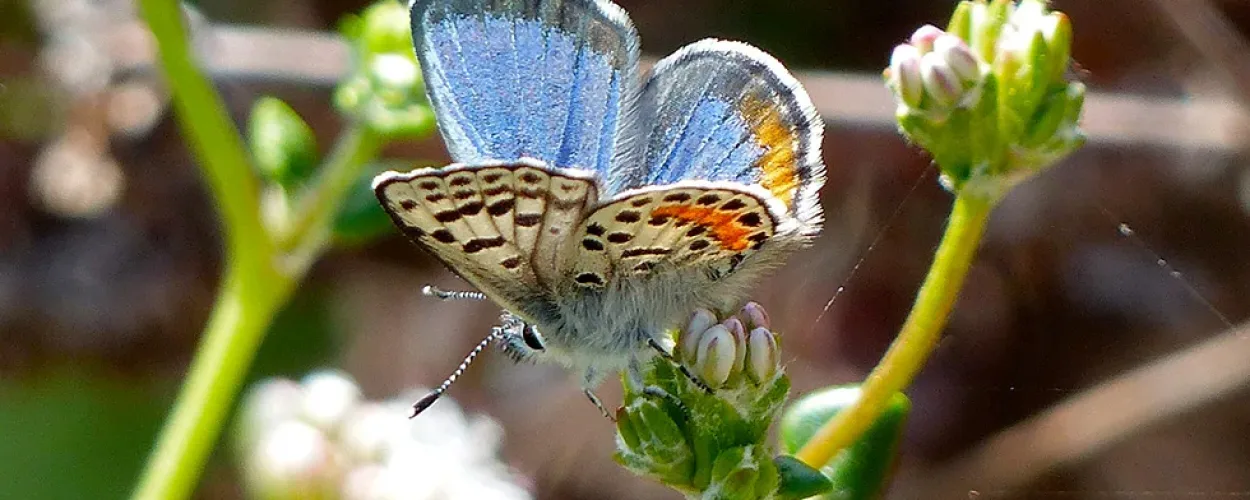
From June through September, a tiny butterfly returns to the coastal bluffs: the El Segundo blue. Its delicate presence is easy to miss, yet it represents something much larger—a landscape beginning to heal.
Life Tied to a Single Plant
The El Segundo blue butterfly exists in only a narrow band of coastal habitat, from the Ballona Wetlands to Abalone Cove. On the Palos Verdes Peninsula, its survival depends entirely on one native plant: seacliff buckwheat.
This plant is everything to the butterfly. Females lay their eggs on its flowers, and once the caterpillars hatch, they feed exclusively on its leaves. Without healthy stands of seacliff buckwheat, the butterfly’s life cycle simply cannot continue.
For decades, coastal development, invasive species, and habitat fragmentation pushed both plant and butterfly to the brink. Today, restoring that delicate relationship is at the heart of conservation efforts.
Rebuilding a Coastal Ecosystem
At Vicente Bluffs Reserve—where sweeping ocean views meet critical wildlife habitat—restoration is underway. This 84-acre preserve is part of the larger Palos Verdes Nature Preserve and is actively managed to support native species.
Here, crews and volunteers are working side by side to transform the landscape. Invasive plants like black mustard and acacia are being removed, clearing the way for native vegetation to return. These efforts are not small in scale—more than 325 acres across the Peninsula are being restored through support from the State Coastal Conservancy.
Behind the scenes, the Conservancy’s Native Plant Nursery plays a vital role. Seeds collected from local plants are carefully grown into thousands of seedlings, then returned to the preserves to rebuild resilient, local ecosystems.
This work does more than help a single species. It strengthens habitat for a wide range of wildlife, from the rare Palos Verdes blue butterfly to coastal birds like the California gnatcatcher and cactus wren.
A Collaborative Effort
Protecting the El Segundo blue butterfly takes more than one organization—it takes a network.
Through the El Segundo Blue Butterfly Coalition, scientists, land managers, nonprofits, and public agencies are coordinating restoration across the butterfly’s historic range. On the Peninsula, these efforts are especially important, as Conservancy-managed lands represent the southernmost edge of the species’ habitat.
Monitoring helps guide this work. Vegetation surveys track how restored areas are progressing, while comprehensive butterfly surveys—conducted every few years—offer a broader look at population trends and habitat success.
When Nature Responds
As restoration sites mature, encouraging signs are beginning to appear.
Native plants are reestablishing, bird activity is increasing, and rare butterflies are being observed once again. During the summer months, conservation staff turn their attention to blooming seacliff buckwheat, searching for the El Segundo blue as it feeds and reproduces.
Each sighting is more than a moment of discovery—it’s evidence that restoration is working.
The Power of Volunteer Stewardship
This progress is fueled not only by conservation professionals, but by community members who give their time and energy to the land.
Through programs like Adopt‑a‑Plot, volunteers maintain restoration areas, remove invasive weeds, and care for native plantings. On a bluff overlooking the ocean, one such site has been transformed into thriving butterfly habitat—tended regularly by dedicated volunteers.
Every hour spent pulling weeds or planting seedlings is an investment in the future of this coastline.
Experience It for Yourself
Butterfly season offers a chance to witness this transformation firsthand. The best opportunity to spot the El Segundo blue is during its summer flight season, when seacliff buckwheat is in bloom.
Visitors can explore the trails at Vicente Bluffs and other coastal preserves, or join a guided nature walk to learn more about the restoration work happening on the ground—and the species it supports.
A Future Taking Flight
The return of the El Segundo blue butterfly is a quiet but powerful reminder: when we restore habitat, nature responds.
Every native plant grown, every acre restored, and every volunteer hour contributes to a stronger, more connected ecosystem. Together, these efforts are ensuring that this rare butterfly—and the coastal landscape it depends on—will continue to thrive for generations to come.
The Conservancy will have a free guided nature walk through restoration areas at Vicente Bluffs Reserve on Saturday, July 11. Participants will learn about ongoing restoration efforts, discover how native plants support endangered wildlife, and—with a little luck—catch a glimpse of these beautiful butterflies in their natural habitat.
To register, visit: Sign Up